How to Choose a Baby Carrier?
You’ve heard babywearing can be helpful and you started looking for baby carriers, only to discover that there are a lot of options. Like, a lot. You might just rely on the hand-me-downs, take advice from family and friends or online but, it just adds to the confusion.
Here’s the thing. The baby carrier your friend swears by might not be the best option for your body, your family and your specific needs. So, how are you supposed to find your baby carrier, you ask? Let’s break it down so you can feel confident navigating all those options and finding what's right for you.
Understand your babywearing options
Let's start with the basics. Here are the main categories you'll come across:
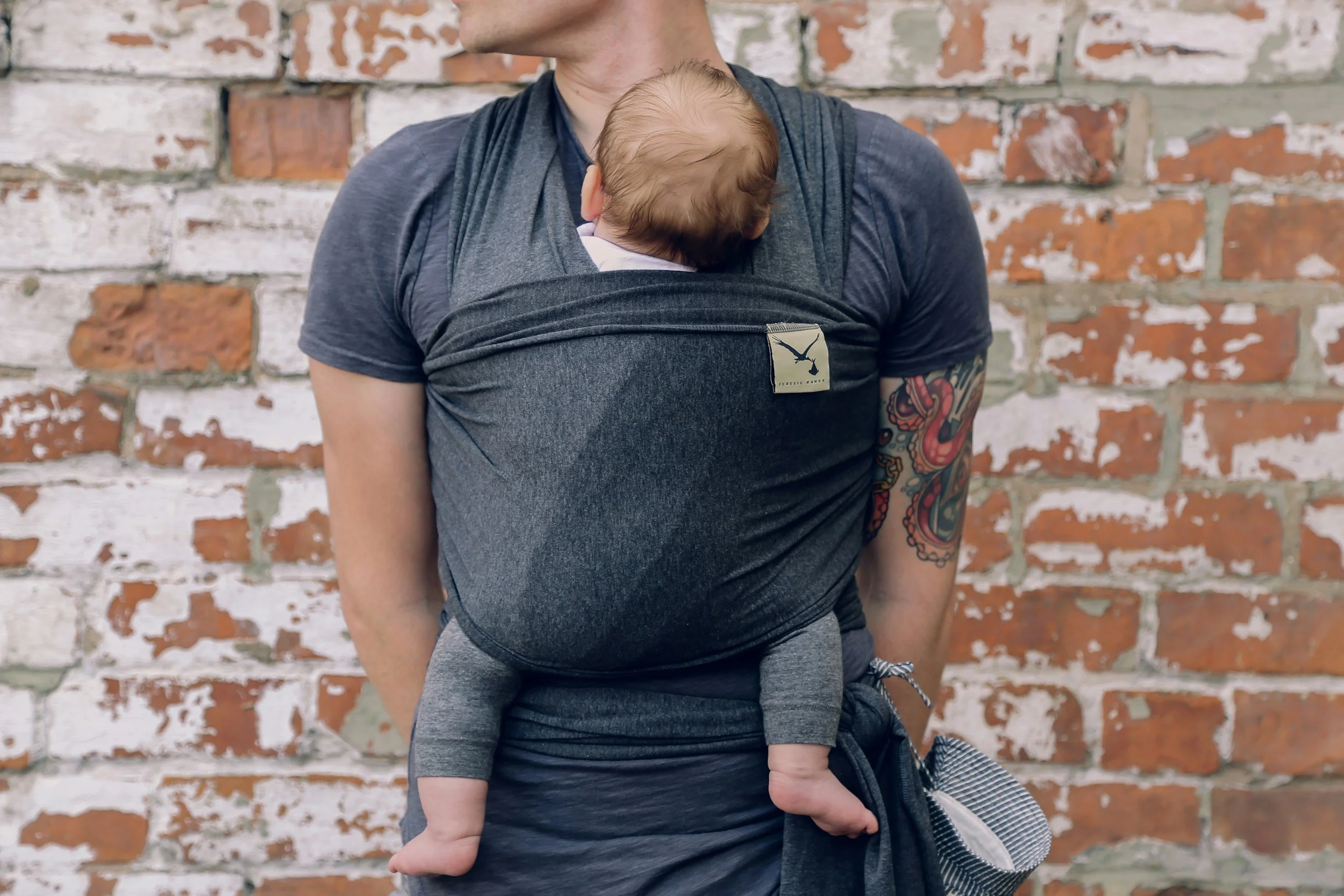
Stretchy Wraps
Are long pieces of stretchy fabric that you wrap around yourself and baby. They're fantastic for newborns, create that snug, womb-like feeling babies love, and are super beginner-friendly. However, baby will likely outgrow them quickly, typically around 3-6months old, adjustment once baby is installed is complicated and because of that, you can’t breastfeed in them.

Woven Wraps
Are also long pieces of fabric, but they're woven rather than stretchy. They offer amazing support, that same snug feeling, and they're honestly the most versatile option out there. You can use them from birth through toddlerhood and carry in countless positions. However, learning how to use them takes time and intention and the long tails make them hard to install outside without touching the ground.

Ring Slings
Are a single piece of fabric sewn through rings, creating an adjustable pouch for baby. Once you get the hang of them (and yes, it takes a bit of practice), they're incredibly quick to put on and take off. They're also compact and perfect for when your baby starts getting curious about the world around them. By nature, the carry is asymmetrical so they’re not the best for back issues and long carrying sessions.

Meh Dais
Have a rectangular panel with four long pieces of fabric at each corner that you tie around yourself and baby. They're comfortable, less bulky than soft-structured carriers, and pretty straightforward to use once you learn the ties. Depending on the brand, adjustments for a newborn can be more or less tedious.

Soft-Structured Carriers (SSCs)
Have a panel with or without a waist strap and shoulder straps. They're perfect for outdoor adventures, quick to put on and adjust, and offer excellent support. They are bulky, though, and not the best fit for newborns.
And then there are hybrids, which are combinations of two or more of the above types. The market is full of them, and while manufacturers are trying to make things easier by offering "the best of both worlds," sometimes it’s just not the case!
That being said, here's something important to understand: even within each category, there's huge variation. Where and how they're sourced and made, fabric quality and thickness, materials used, designs, lengths, widths, padding, adjustability. All of this affects how a carrier works and why prices can vary so dramatically.
Narrow Down Your Babywearing Options
Now, let’s reflect on how you actually want to use your baby carrier.
Are you planning to:
Use it to transition baby out of the womb?
Have extended wearing sessions throughout the day?
Mostly snuggle indoors while you move around the house?
Have quick ups to run errands or soothe a wiggling toddler?
Wear baby mostly outdoors on walks and adventures?
Breastfeed on the go?
Use it for several years as your child grows?
You might be thinking: Yes, all of it! I want a baby carrier that covers all of it! But realistically, there's no single baby carrier that will perfectly fit all your criteria and uses. That's why some families end up with two or more carriers for different needs at different moments and periods in life. You might want to start with your primary use and keep a secondary (and third!) option on your wishlist for later if you find you need something different.
For example, a stretchy wrap for the 1st few months and a meh dai or soft-structured carrier for later. A woven wrap or meh dai for inside and a soft-structured carrier for outside. A woven wrap for naps and a ring sling for quick ups. A meh dai or a soft-structured carrier for easy front and back carry and a ring sling for breastfeeding and quick ups. You get the idea!
Then, consider what matters most to you. Everyone has different priorities, and that's completely valid. Think about:
Budget
Whether ethical production is important to you
Whether you'd love to support a small company or prefer a well-established brand
Fabric preferences (natural fibers, specific textures, thickness, breathability)
Washability
The quality of materials and construction
Style and aesthetics preferences
Whether you need something that can be shared easily between caregivers
How compact it needs to be
By now, you might have narrowed down your number of options and the brands you are drawn to.
As you're looking at specific baby carriers, also pay attention to:
Physiologic position. Not all baby carriers on the market achieve an optimal position for baby. This is particularly true for soft-structured carriers and derived hybrids. Look at pictures and videos. Baby’s knees should be higher than their bottom, creating an “M” or “froggy” position, without hands or arms support. At least we want them on the same level and definitely not the knees hanging lower. Panel support should be wide enough to cover behind the knees without extending the legs.
Adjustability. On the caretaker side, think fabric and strap lengths. Lengthier is not always better if you are petite, as you’ll have a lot of fabric hanging out and one-size-fits-all might be too short for a bigger body type. Also, sometimes, padding gets in the way and it’s difficult to tighten properly. On baby’s side, look at the panel’s width and height for meh dais and soft-structured carriers and check whether there are systems in place to achieve a personalized fit.
Your personal restrictions matter too. If reaching behind your back for buckling or tightening a knot is uncomfortable, consider a carrier that doesn’t require this, such as a ring sling or an X-strapped soft-structured carrier. You can also choose a longer wrap so you can tie on the front or side.
Test and Practice
The best way to check if a baby carrier works for you is… to try it! Would you buy a pair of shoes without trying it 1st or making sure you could return them if they don’t fit? Of course not! The same goes for baby carriers. As you can see, so many factors have to be taken into account and every baby carrier fits and distributes weight differently. You and baby need to feel comfortable, otherwise you’ll not use it! But remember, more padding doesn't automatically mean better. Heavily padded carriers can actually be less flexible, bulkier, and harder to move in.
But where can you try baby carriers you may ask? Well, you can reach out to moms or babywearing groups near you. Babywearing consultants can also assist. They usually own a good collection. I know I do! And always looking for more (really like shoes!!). I also love the Try Before you Buy Program of Little Zen One for this (US and Canada).
And, the best time to explore baby carriers, try some on, and learn how to use them is during pregnancy. It's one less thing to figure out in those early postpartum days when you're adjusting to life with a newborn. Just make sure to use a weighted doll or plushy during tests as you’ll be able to pick up on what feels right or not more accurately.
Also, I’d like to gently remind you that babywearing is a skill. And just like any new skill, it takes practice, for both you and your baby. If the first few tries feel awkward or don't go perfectly, that's OK! Expected even. Give yourselves time, keep practicing, and please don't give up. I promise, it's so worth it.
Final words
I know it can feel overwhelming when you start looking for baby carriers. Remember you’re not looking for the perfect baby carrier, you’re looking for what works for your family, your baby, and your life. Trust yourself to know what feels right, pay attention to what matters most to you, and don't be afraid to try things out.
And if you'd like help deciding between options, want to try carriers before you buy, or just need some guidance learning how to use what you have, I'm always here to support you.
Happy babywearing!